


Introduction
This page aims to provide you and your parents with information regarding the condition Scoliosis.
Overview
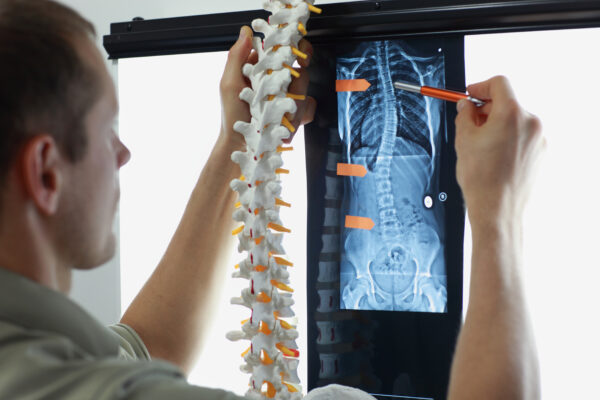
Scoliosis is a sideways curvature of the spine when viewed from the back or front. It is often accompanied by a twisting of the body resulting in prominence of the ribs.
Typical signs include:
• A visibly curved spine
• One shoulder being higher than the other
• One shoulder or hip being more prominent than the other
• Clothes not hanging properly
• A prominent ribcage
• A difference in leg lengths
Back pain is common in adults with scoliosis. Young people with scoliosis may also experience some discomfort but it’s less likely to be severe.
Scoliosis can occur at any age, but most commonly it develops during early adolescence. This is a period of rapid growth when a child’s body starts to grow and becomes more adult.
There is no known way of preventing scoliosis from occurring. In most cases (around 8 in 10 cases) the cause is unknown. This is called idiopathic scoliosis.
A small number of cases are caused by other conditions, including, but not limited to:
• Cerebral palsy
• Muscular dystrophy
• Marfan syndrome
• Wear and tear of the spine associated with ageing – Degenerative Scoliosis
Videos
The video below gives an overview of spinal correction surgery that can be performed in relation to Adolescent Idiopathic Scoliosis
In this film pre-operative exercise and balance, our physiotherapist Patrick talks through some key pre-operative exercises. Please complete as prescribed by your physiotherapist.
External Links
Scoliosis Association UK (SAUK)
The following link takes you to the charitable organisation SAUK which has lots of information and support about Scoliosis and living with the condition
NHS.UK
The following link contains a brief overview of Scoliosis and its treatment in Children
https://www.nhs.uk/conditions/scoliosis/
British Scoliosis Society (BSS)
The following link contains information in relation to Scoliosis from the BSS
http://www.britscoliosissoc.org.uk/patient-information/scoliosis-overview